Start with the season and a simple map
Darwin, also known as Garramilla, is on Larrakia Country. The city is easier to enjoy when you begin with the day’s conditions rather than a long list of attractions. Check current official visitor information, choose one broad area to explore and leave room for heat, rain, transport and the slower pace of the Top End. A waterfront walk, a city-and-Esplanade morning or a short outdoor visit can each become a good day when it has one clear anchor instead of several distant commitments.
Give the climate the first decision
In Darwin, the weather is part of the itinerary. Begin early when an outdoor activity matters, carry water and sun protection, and give yourself a shaded or indoor alternative for the middle of the day. Conditions can change quickly across the year, so a plan that looked comfortable when it was written may need adjusting on the morning. Use current official advice for heat, wet-season conditions, marine safety, road access and park closures. Do not rely on an old social post or a generic travel itinerary when safety or access is involved.
Use the city as a set of connected pockets
Darwin’s core, waterfront, foreshore areas, markets, galleries and parks work best as separate parts of a visit rather than one rushed circuit. Choose a small cluster for each half-day: perhaps a city walk and waterfront pause, or an early park visit followed by a slower meal. Current Darwin visitor guidance is a useful starting point for finding local facilities and experiences. Let current local information shape the route, then build a buffer for parking, walking, shade and the possibility that the day calls for a change of pace.
Make water choices deliberately
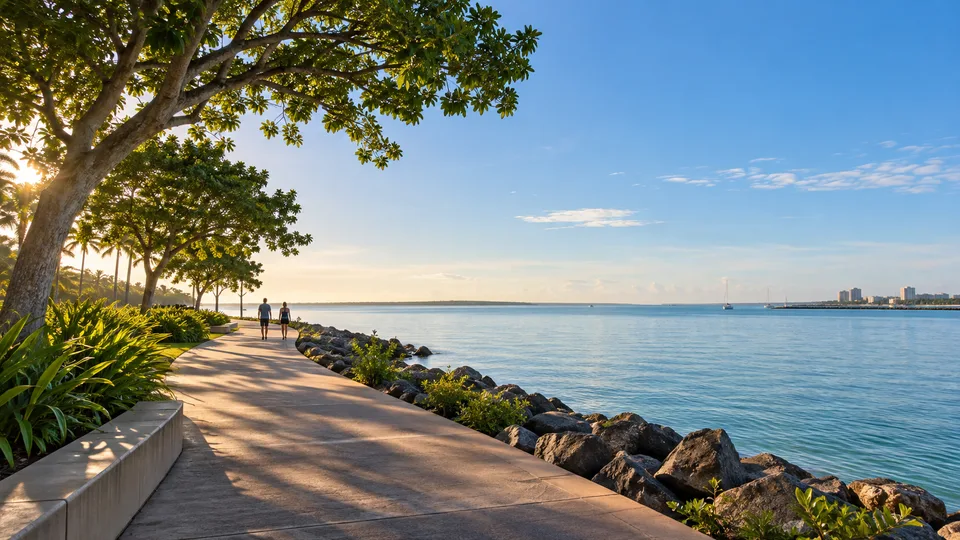
The harbour and foreshore are central to Darwin’s character, but a view of the water is not the same as an invitation to swim. Use designated facilities and follow current local notices and operator advice. For any activity on or near water, confirm the conditions, access rules and safety guidance before leaving home. A waterfront walk, a shaded meal or a harbour-view stop can be just as valuable as a water-based activity, and it avoids turning a flexible city day into a risk decision made from incomplete information.
Plan outdoor time with park conditions in mind
A nearby park or reserve can add a strong contrast to the city, but it needs the same practical planning as a longer day trip. Check the particular park’s current access, alerts, facilities and safety advice before travel. Carry water, use sun protection, wear suitable footwear and avoid strenuous activity in high heat. Do not assume a trail, swimming area, toilet or road will be open simply because it appears in an older guide.
Use culture and food without overpromising
Darwin has cultural institutions, local food, markets and events, but their schedules, trading days and programs are changeable. Choose one current experience that genuinely interests you, then check its own official information for times, tickets, access and weather arrangements. Treat markets and sunset plans as possibilities rather than fixed promises. This approach keeps a guide useful in every season and gives you space to respond to what is actually open and comfortable on the day.
Travel, access and local help
For transport, visitor services and accommodation, start with current visitor and operator information rather than trying to reconstruct a route from memory. Readers with essential mobility, sensory, medical or family requirements should contact a venue or operator directly before travel. A compact Darwin itinerary benefits from clear handovers: know how you will reach the next stop, carry what the climate requires and avoid a schedule so tight that a small delay removes the rest of the day.
Respect Country and leave room to listen
The City of Darwin acknowledges Larrakia Country. That acknowledgement should frame a visit, but it is not a substitute for learning from Larrakia people and First Nations-led organisations. When a venue offers cultural interpretation, follow its guidance, including photography and cultural-sensitivity directions. Keep a respectful distance from places and stories that ask for it. A better visit is not one that claims to have seen everything; it is one that moves through Country with attention, care and enough time to understand context.
Before you go
Confirm current weather, marine and park conditions, transport, venue access and the availability of any time-sensitive experience. Darwin works best with a flexible rhythm: start early, choose one or two connected places, plan a shaded pause and leave room for current conditions to change the day.
Sources
Sources last validated: 14 September 2026.