Start with the site, not a spectacle
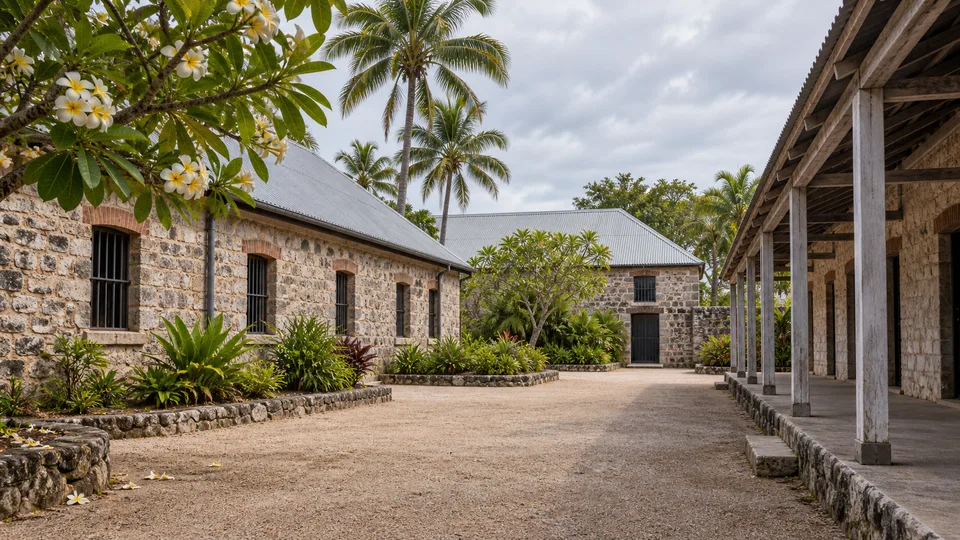
Fannie Bay Gaol is a historic prison site at the corner of East Point Road and Ross Smith Avenue in Darwin. The Museum and Art Gallery of the Northern Territory says it operated as Her Majesty’s Gaol and Labour Prison from 20 September 1883 until 1 September 1979, when prisoners moved to Berrimah. That long operational history is the right frame for a visit: the buildings are evidence of confinement, administration, punishment and the lives affected by them, not simply atmospheric architecture. Begin by reading the orientation material and deciding to move slowly through the grounds.
Follow the buildings as a sequence
The gaol’s surviving areas include separate male and female prison buildings, an infirmary, kitchen and mess building, remand section, watchtower, maximum-security wings and a section used for Aboriginal prisoners. They were constructed or altered at different points in the site’s history. Rather than treating each structure as a standalone curiosity, notice how the arrangement organised movement, surveillance and separation. Labels and interpretation offer the safest route to context, especially where terminology in historic fabric may be confronting or reflect institutional injustice.
Use the audio tour for local voices
MAGNT offers an audio experience, On the Inside, featuring Larrakia Elder Dr Richard Fejo sharing stories about inmates and escapes. Use it to add a voice-led layer to the physical route, ideally with headphones and at a pace that does not block other visitors. The purpose is not to turn individual stories into entertainment; it is to let place-specific interpretation complicate the impression left by cells, yards and walls. Keep an eye on your surroundings while listening, especially when moving between uneven or confined areas.
Handle difficult history with respect
The gaol’s history includes the gallows in the infirmary, last used for executions in the Northern Territory in 1952. It also includes the incarceration of Aboriginal people within a system shaped by colonial power. Do not invent individual narratives from a bare room or object. Read the information provided, use considered language with children and companions, and accept that some parts of the story call for quiet reflection rather than rapid photography. A respectful visit leaves space for what is known and acknowledges what needs further context.
Plan the practical side
MAGNT currently lists Fannie Bay Gaol as open Wednesday to Sunday, 10 am to 2 pm, with free entry. It is closed on New Year’s Day, Good Friday, Christmas Day and Boxing Day. Check the official page before travel because access conditions can change. The shorter daily window makes it sensible to arrive early rather than fit the gaol into the final minutes of a busy itinerary. Bring water and sun protection for the outdoor parts of the site, and ask staff directly about access support or current restrictions relevant to your group.
Before you go
Confirm the day’s hours and any visitor guidance with MAGNT, then allow enough time to read rather than race between buildings. Pairing the visit with a nearby cultural stop can work, but avoid treating the gaol as a checklist item. Its value is in the physical evidence and the careful interpretation that connects it to Darwin’s social history. Leave with questions where the material raises them; a historic prison site can be meaningful precisely because it resists an easy or tidy story.
Sources
Sources last validated: 14 September 2026.